







A restaurant marketer’s guide to geofencing ads.
Let me start with a confession.
For years, restaurant owners asked me the same question: “How do we get more new customers?”
We tried everything:
- Valpak coupons the size of a bath towel
- Radio ads during the farm report
- Facebook posts that Mom and three loyal regulars liked
- Billboards that made the cows aware of our lunch specials
And then smartphones happened.
Now nearly everyone carries a glowing rectangle that reveals where they are, where they’ve been, and — more importantly — where they might eat next.
Enter geofencing advertising, the closest thing to mind-reading legally allowed in marketing.
What Geofencing Actually Is (In Human Language)
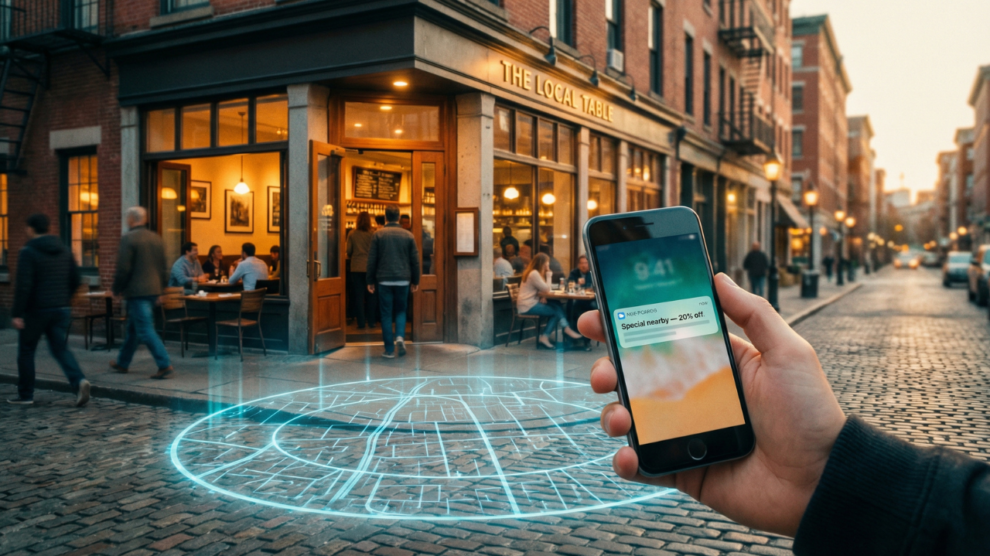
Geofencing creates an invisible digital boundary around a real-world location. When someone enters that boundary with their smartphone, they can be served ads on:
- mobile apps
- social media
- websites
- streaming TV
- audio apps like Spotify
- YouTube & video platforms
Think of it like this: Instead of shouting to the entire city, you whisper to people standing across the street holding their car keys at dinner time.
That’s powerful.
That’s efficient.
That’s slightly spooky — but effective.
Why Restaurants Win Big with Geofencing
Restaurants live and die by proximity + timing + impulse.
People rarely plan dinner three days in advance. They plan it at 5:42 PM while sitting in traffic, wondering if they have the emotional strength to cook chicken again.
Geofencing works because it reaches people at the exact moment hunger meets convenience.
What it does for you:
✔ Drives foot traffic from nearby diners
✔ Attracts customers already in “eat mode”
✔ Steers competitor customers your way
✔ Creates urgency and impulse visits
✔ Builds repeat visits through retargeting
✔ Provides real-world attribution (not just clicks)
In short: it puts your message where decisions happen.
The Moment Geofencing Became a No-Brainer
Picture this:
A couple walks out of your competitor’s restaurant after waiting 40 minutes for a table.
Their phones light up: “Skip the wait next time. 10% off dinner tonight at Bella Vista — 2 minutes away.”
Guess where they eat next week. Not at the place with the pager.
Where to Place Your Digital Fences
This is where strategy beats technology.
Fence Your Own Location
Capture nearby foot traffic and remind people you exist.
Example:
“Hungry? You’re 90 seconds from fresh pasta and happiness.”
Fence Competitors
Yes, it’s legal. Yes, it works. Yes, they would do it to you.
Example:
“Before you settle for average… try our wood-fired pizza.”
Fence Office Complexes
Target the lunch crowd with speed and value.
Example:
“Lunch in 10 minutes or it’s free garlic knots.”
(Use responsibly.)
Fence Hotels & Tourist Areas
Travelers don’t know where to eat. You do.
Example:
“Welcome to town! Local seafood, 2 blocks away.”
Fence Event Venues & Stadiums
Hungry crowds leaving events = opportunity.
Example:
“Show your ticket stub for a free dessert tonight.”
Fence Residential Neighborhoods
Promote takeout, delivery, and family nights.
Example:
“Skip cooking. Kids eat free tonight.”
Parents will weep with gratitude.
The Secret Sauce: Timing
If you advertise dinner at 10 AM, you’re background noise.
If you advertise dinner at 5:15 PM during rush hour…
…you’re a hero.
Smart timing examples:
Morning commute:
Coffee & breakfast sandwiches
11 AM:
Lunch speed & value
3–5 PM:
Happy hour reminders
5–7 PM:
Dinner temptation
9 PM+:
Late-night snacks & drinks
Rainy days:
Soup, comfort food, and emotional healing
Offers That Actually Get People Through the Door
No one changes plans for “Great Food!”
They change plans for specific, immediate value.
Offers that work:
- Free appetizer with entrée
- BOGO lunch deals
- Happy hour reminders
- Kids eat free
- Rainy day specials
- Late-night bites
- Birthday & loyalty rewards
- Seasonal limited-time items
Offers that don’t:
❌ “Come visit us!”
❌ “Family friendly dining”
❌ “We care about quality”
So does everyone else.
The Magic Move Most Restaurants Skip: Retargeting
Here’s where geofencing turns from clever into brilliant.
After someone enters your geofence — even if they don’t visit — you can retarget them for days or weeks.
Meaning: They walk past your restaurant today…
…and see your ads tonight, tomorrow, and next week.
You stay top of mind until hunger wins.
How Much Does This Cost?
Less than the billboard that only squirrels notice.
Typical ranges:
- Small independent restaurant: $300–$1,000/month
- Full-service single location: $1,000–$3,000/month
- Multi-location brands: $5,000+
Because you’re targeting high-intent diners, you waste less spend than traditional advertising.
Common Mistakes (AKA How to Burn Money Faster)
Let’s save you some tuition:
❌ Fencing too large an area
❌ Generic ads with no offer
❌ Ignoring timing
❌ No retargeting strategy
❌ No tracking of store visits
❌ Boring creative
❌ Sending steakhouse ads to vegans
Precision matters.
Privacy & “Are We Spying on People?”
A fair question.
Reputable platforms use consent-based, anonymized location data.
You are targeting devices, not spying on individuals. Also, if your phone has ever suggested a nearby coffee shop…
…this ship sailed years ago.
Real-World Scenario
A family leaves a high school basketball game.
Phones light up: “Celebrate the win with free queso tonight — 3 minutes away.”
That queso costs you $1.10. The table spends $58.
Multiply by dozens of tables. Now you see why national chains invest heavily in location-based marketing.
Where Geofencing Fits in Your Marketing Ecosystem
It works best alongside:
- Google Business Profile optimization
- local SEO
- social ads
- email & SMS marketing
- loyalty programs
- online ordering
- POS & CRM data
Think of geofencing as the traffic generator, while loyalty & email turn visitors into regulars.
So… Is It Worth It?
If your restaurant depends on people physically walking through your door…
…it’s one of the most effective tools available.
Geofencing reaches people at the moment they decide where to eat — not hours later when they’ve already reheated leftovers.
And in the restaurant world, timing isn’t everything.
It’s dinner.
If the goal is filling tables, winning competitor customers, and staying top-of-mind with hungry humans nearby geofencing isn’t futuristic. It’s practical. It’s measurable. And unlike the coupon mailer, it doesn’t require cutting along the dotted line.
Turn Nearby Smartphones into Paying Guests
✅ Choose the Right Platform
Programmatic Geofencing Providers
☐ Simpli.fi
☐ GroundTruth
☐ StackAdapt
☐ AdTheorent
Social & Search Location Targeting
☐ Meta Ads
☐ Google Ads
Mobile Location Data Platforms
☐ Radar
☐ Bluedot
☐ Foursquare
☐ Confirm provider uses consent-based location data
✅ Create Offers That Trigger Immediate Action
High-Converting Offer Ideas
☐ Free appetizer with entrée
☐ Happy hour reminder
☐ Kids eat free
☐ BOGO lunch deal
☐ Rainy-day comfort special
☐ Show ticket stub discount
☐ Late-night specials
☐ Loyalty reward offer
☐ Limited-time seasonal item
Checklist:
☐ Clear value
☐ Easy to redeem
☐ Immediate use
☐ Simple wording
Pro Tips from the Field
✔ Start small and scale winners
✔ Precision beats large coverage
✔ Offers drive visits — not branding
✔ Retargeting multiplies results
✔ Timing matters more than impressions
✔ Competitor conquesting works shockingly well
The One-Sentence Strategy
Reach hungry people nearby, give them a reason to visit now, and remind them until they do.
That’s geofencing done right.





Add Comment